About Mixed Method Approaches to Collaborative History (MMATCH)
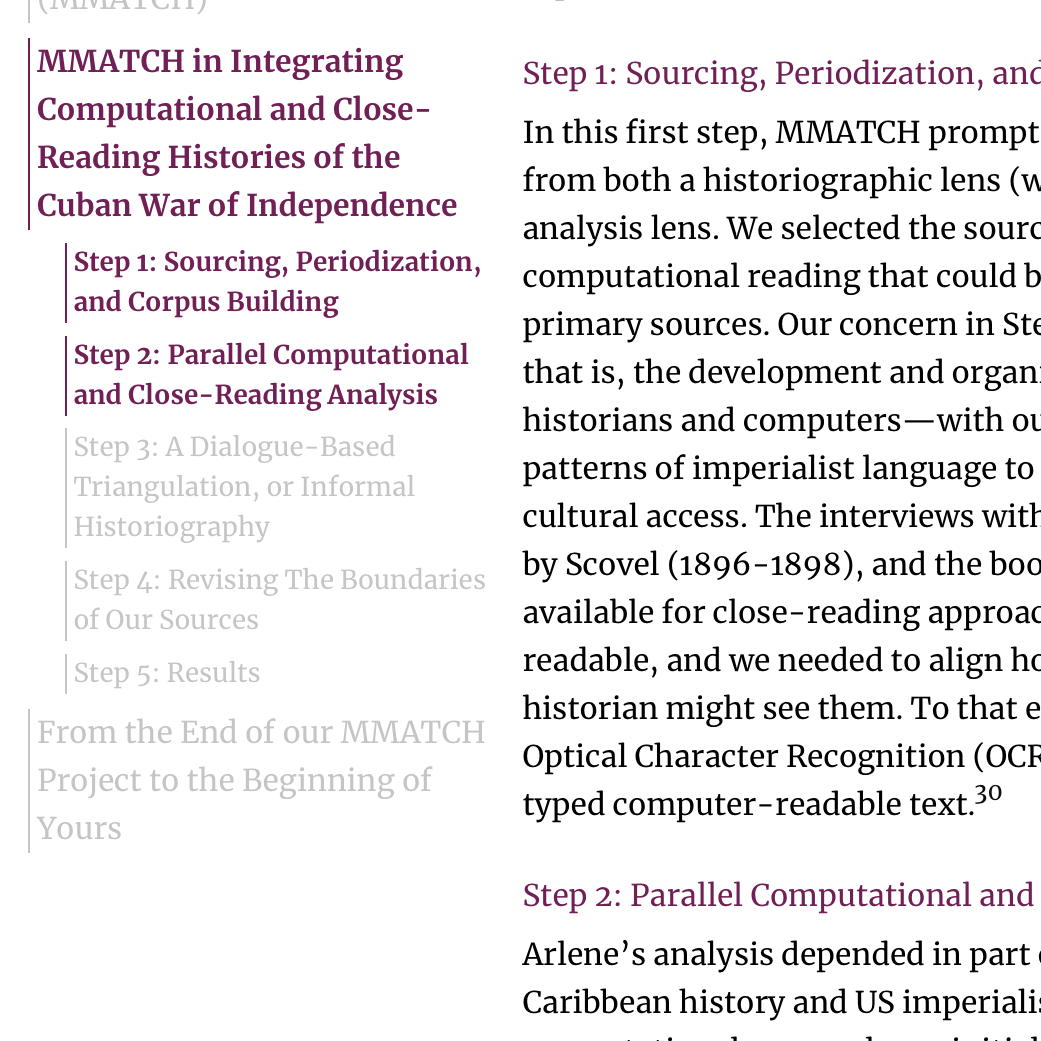
Mixed Method Approaches to Collaborative History (MMATCH) is a mixed-methods approach that started with my own work in computational text analysis and has developed into a collaboration process that emphasizes transparency and positionality. The five-step MMATCH methodology systematically navigates a revision and integration process of writing that moves between traditional close-reading historical analysis and new analytical methods. As part of that systematic process, it simultaneously accommodates the voices of multiple authors.
MMATCH and Computational Text Analysis as a DBHR Project
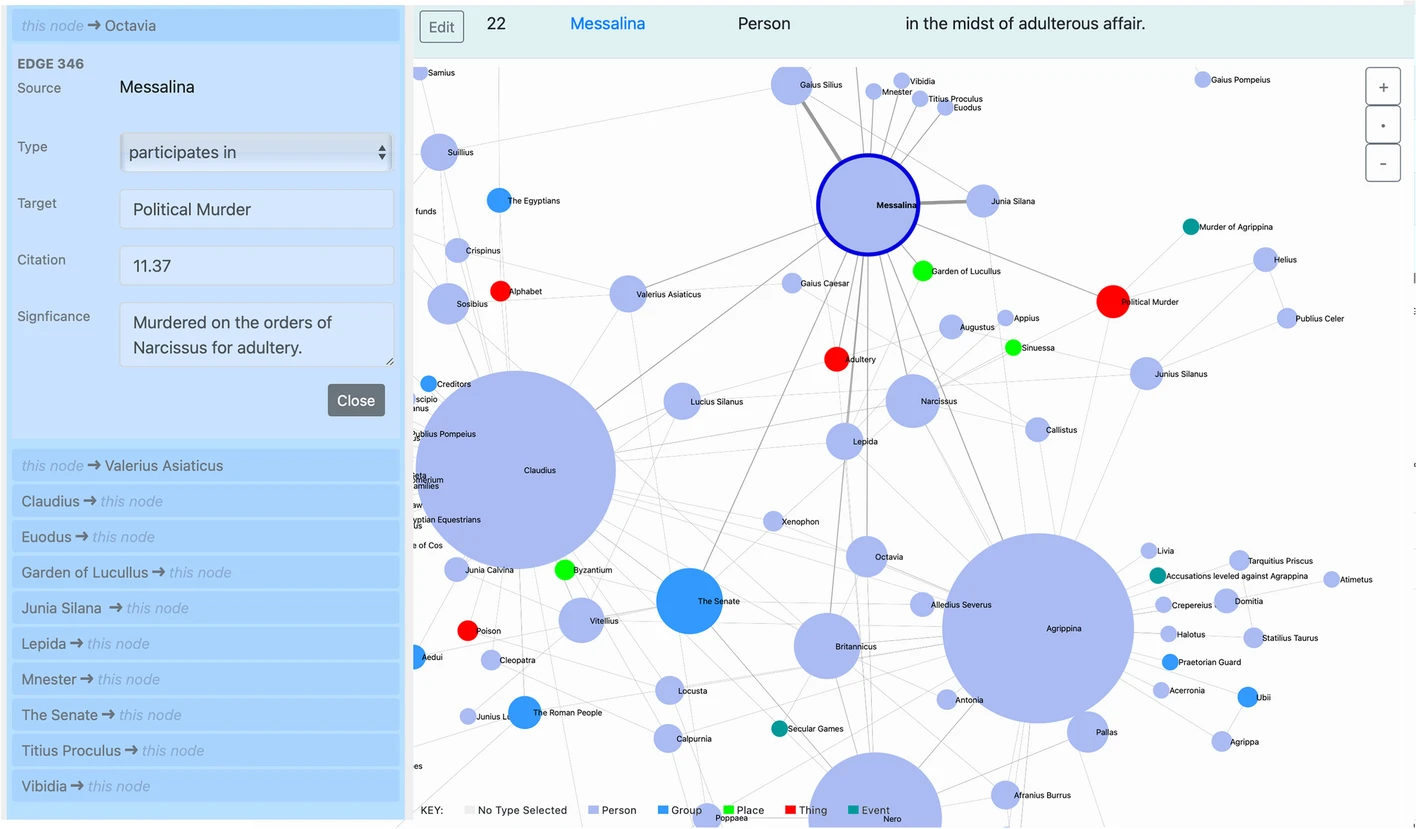
The world of text mining—particularly low-barrier-to-entry topic modeling with MALLET and work with AntConc or NTLK—opens up a whole variety of analytical options for scholars interested in pursuing computational text analysis. The reality of the data landscape for digital humanists, though, is that many digitized and transcribed texts have very restrictive copyright and usage guidelines that limit applications of text mining, hGIS and network-theoretical approaches. In these instances, full-text download and off-the-shelf analysis are often not an option. In these cases, in-text citations become an absolutely vital part of the digital analysis. However, readily available topic modeling tools like MALLET strip the citation data scholars, digital and analog alike, need to participate in a scholarly debate.
This citational concern was the initial platform for a Workflow for Paywalled Texts that documents the cleaning and treatment of digitized texts that preserves the original word order and citations so that scholars of both traditional and digital-methods persuasions can recreate the process.
Work with other historians and humanists at Indiana University on citation preservation in computational text analysis fostered several collaborations, one of which became the full articulation of MMATCH in an article published in 2024.
Future Plans
MMATCH is also the platform on which I have built a number of more traditional argument-driven history endeavors. In particular, both MMATCH and DBHR will anchor Archives of Ivory, an exploration of environmental histories of ivory with Dr. Jonathan Schlesinger. Ivory tusks have chemical signatures that, when analyzed, can tell us where an elephant lived and what species of elephant it is. That information is itself archival data, the chemical archives that ivory contains can be combined with traditional archival research on carved-ivory specimens and their artistic and human-use information. However, there are two issues. First, carved ivories currently cannot be tested because existing mechanisms for assessing elephant species and origin are destructive. Second, ivory cannot be trafficked across nation-state boundaries, and so a more robust environmental history will require many partners across the globe using the same mechanism to gather chemical and archival data about a specific elephant-ivory specimen and combining them into a single database.
In January 2025, the Archives of Ivory grant team submitted a $400,000 grant to the BioInformatics Directorate at the NSF to develop a validated measure for non-destructive chemical analysis of ivory and a database to hold both chemical-archive and traditional-archive data about the ivory specimens in the Field Museum and the American Museum of Natural History. Our goal is to identify the species and origin of an elephant tusk, which will shape our understanding of the historical interactions between humans and elephants, and then combine that data with curatorial and historical textual data about that specimen. My DBHR contribution to this environmental history is twofold. First, I am designing a database structure and analysis method that can ingest, and then use machine learning to connect, chemical analysis, museum-provided metadata and other historical analysis of each of the ivory specimens in the database that the team is planning to test. Our hope is that, as we iterate through the DBHR design phases of the ArchIvory database, the machine-learning approach will help us correlate human-generated data with potential chemical analysis, speciation and geolocation. In instances when we cannot physically test carved-ivory specimens, this approach should allow us to use traditional archival data to rule out particular elephant species and elephant habitates without chemical analysis. Second, I am taking lead on designing the documentation and database-management systems that will allow other partners worldwide to test their own ivory specimens and contribute to a distributed network of data packets about ivory that both historians and biologists can load into our machine-learning analysis toolkit. Finally, the MMATCH contribution to Archives of Ivory will, in partnership with Dr. Schlesinger, provide a systematic digital-history-methods approach to using the machine-learning analysis as Dr. Schlesinger addresses his end goal: a monograph that will trace elephant-ivory trade from Asian and African elephants and explore how human demand for Asian and African elephant ivory has shaped the environmental history of, and human movement through, those elephant species’ habitats.
Full Funding & Publication List
Text Based Publications
2024
Kalani Craig, Arlene Diaz and David Kloster, "The Coded Language of Empire: Digital History, Archival Deep-Dives and US Imperialism in Cuba’s Third War of Independence", American Historical Review, Volume 129, Issue 2, June 2024, Pages 475–516.
DOI: https://doi.org/10.1093/ahr/rhae179.Presentations
Invited Talks & Workshops
2017
"Citation Preservation as a Tool to Open Paywalled Sources to Computational Analysis for Novice Digital Humanities Practitioners" at Translation Studies and/in the Digital Humanities, sponsored by The Centre for Translation Technologies at Chinese University of Hong Kong, (Hong Kong), June 12-13 2017.
Conference Presentations
2018
"Modeling Memories of Conflict: Understanding Memory and Space in Medieval Biography Using Corpus Linguistics and Network Analysis" at the 132st annual meeting of the American Historical Association (Washington, DC), January 7, 2018.
2017
"Min(d)ing the Gap: Citation Preservation as a Tool to Open Paywalled Sources to Computational Analysis" at the 131st annual meeting of the American Historical Association (Denver, CO), January 6, 2017.
2016
"Between Miracles and Memory: Construction of Authority in Early Medieval Episcopal Saint’s Lives and Deeds of Bishops" at the 36th Annual Meeting of Indiana Association of Historians, Indiana University–Bloomington, Feb 20, 2016.
2015
"Workflows for Medievalists with Open Data Ideals and Closed-Source Texts" in "What does active learning look like in Canvas?" in "Medieval Data: Prospects and Practices" at the 50th International Congress on Medieval Studies, Medieval Institute, Western Michigan University, May 14–17, 2015.
2014
"‘Aut damnat aut corrigit’: A Digital Search for the Origins of Gregorian Church Reform Language" in "The Portrayal of Religious Change in Gesta and Vitae Episcoporum and Abbatum" at the 49th International Congress on Medieval Studies, Medieval Institute, Western Michigan University, May 8–11, 2014.
"Nouns and their networks: Tracing Patterns of Historical Change and Continuity by Combining Text Mining and Network Analysis" in "Digital History: Transforming Teaching and Research" at the 34th Annual Meeting of Indiana Association of Historians, Anderson University, March 8, 2014.